Bodo People of Assam: Origin, Culture, Festivals, Food & More
Bodo People of Assam: Origin, Culture, Festivals, History, Food & More. असम के बोडो जनजाति The Bodo people of Assam represent one of the most vibrant and culturally rich indigenous communities in Northeast India. They proudly carry forward their ancient traditions while actively contributing to modern Assamese society. This blog explores the origin, culture, language,…
Bodo People of Assam: Origin, Culture, Festivals, History, Food & More. असम के बोडो जनजाति
The Bodo people of Assam represent one of the most vibrant and culturally rich indigenous communities in Northeast India. They proudly carry forward their ancient traditions while actively contributing to modern Assamese society. This blog explores the origin, culture, language, food, festivals, education, and traditional attire of the Bodo people in clear, active-voice narration.
1. The Bodo People Trace Their Origin to Ancient Assam
The Bodos belong to the Tibeto-Burman language family and count among the earliest settlers of Assam. Their ancestors likely established the Kachari kingdom, which ruled parts of Assam before the Ahoms arrived.
Over the centuries, the Bodos built a strong identity through their agrarian lifestyle and tight-knit community structure. In recent times, they pushed for autonomy and successfully created the Bodoland Territorial Region (BTR), covering Kokrajhar, Chirang, Baksa, and Udalguri districts.
2. They Speak and Promote the Bodo Language
The Bodo people actively preserve and promote their language. As one of the 22 scheduled languages of India, the Bodo language now plays a major role in education, literature, and administration in Assam. Schools teach Bodo as a medium of instruction, and universities like Bodoland University offer higher studies in the language.
Writers and poets have enriched Bodo literature by publishing novels, folk tales, and poems.
3. Celebrate Their Culture with Dance, Music, and Tradition
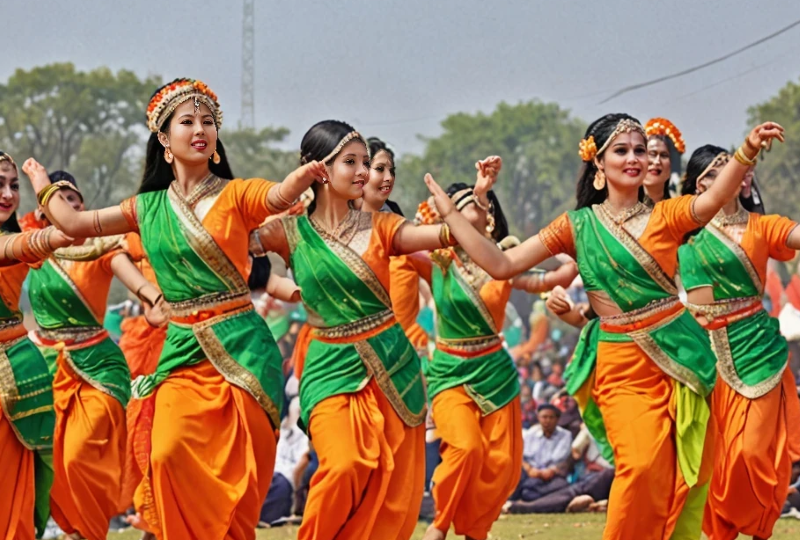
Bodo culture reflects deep respect for nature, spirituality, and community values. Bodo women perform Bagurumba, their graceful traditional dance, during festivals and celebrations. They often sing folk songs accompanied by traditional instruments like the Kham, Siphung, and Serja.
The Bodos teach their cultural values through oral traditions and community gatherings, where elders pass down wisdom to younger generations.
4. Cook Simple, Organic Meals Using Local Ingredients
Bodo families typically prepare meals with rice as the staple. They cook popular dishes such as:
Oma Bedor – a spicy pork dish often flavored with bamboo shoots or herbs.
Narzi – a traditional bitter curry made with dried jute leaves or fish.
Jou – a rice beer they ferment at home for festivals and rituals.
They mostly boil, steam, or ferment their food instead of frying it, maintaining both nutrition and flavor.
5. They Celebrate Festivals with Community Spirit
The Bodos celebrate a range of vibrant and meaningful festivals. Here are some of the most important ones:
Bwisagu
They celebrate Bwisagu in April as their New Year festival. People clean their homes, worship animals, and perform traditional music and dance.
Kherai Puja
They organize Kherai Puja as a spiritual ritual led by a female shaman called Doudini. She dances and prays to the gods while others chant and offer prayers.
Domashi
They observe Domashi to thank nature for a good harvest. Families and neighbors gather to cook, feast, and strengthen their social bonds.
6. Invest in Education and Literacy
Bodo leaders and educators have worked hard to improve literacy within their community. Schools in the BTR now teach in the Bodo language, and young students increasingly pursue higher education.
The government and private sectors have opened many schools and colleges across Bodo-dominated areas, leading to a significant rise in literacy rates.
7. Wear Handwoven Traditional Dresses
Women’s Dress:
Bodo women wear a Dokhona, a handwoven cloth wrapped from chest to ankle. They pair it with a Rijampha (upper cloth) and a decorative Jwmgra (scarf).
Men’s Dress:
Bodo men wear Dhoti or Lungi along with Gamosa or Aronai on their shoulders. They often dress in this attire during religious or cultural events.
Women in the community weave these clothes using handlooms and often decorate them with beautiful traditional motifs.
Bodo People of Assam
The Bodo people of Assam have preserved their identity through centuries of social, political, and cultural transformation. They actively promote their language, celebrate their festivals with pride, and embrace education as a path to empowerment. Their unique culture, food, and traditions make them one of the most fascinating ethnic groups in India.
FAQs About the Bodo People
Q. Where do the Bodo people live? They primarily live in the Bodoland Territorial Region of Assam, including Kokrajhar, Baksa, Chirang, and Udalguri districts.
Q. What is the major Bodo festival? Bwisagu is the most celebrated Bodo festival, marking the New Year and the onset of spring.
Q. What language do the Bodo people speak? They speak the Bodo language, one of the recognized scheduled languages of India.
Q. What is a popular Bodo dish? Oma Bedor, a pork-based dish often cooked with bamboo shoots, is a favorite among the Bodos.
Let me know if you’d like this blog converted into a downloadable PDF, translated into Assamese, or formatted for website publication with headings, tags, and SEO keywords.
Border Tourism Rajasthan,Tanot Mata Temple – A Sacred Symbol of Faith and Patriotism Border Tourism Rajasthan Tanot Mata Temple stands as a powerful blend of spirituality and national pride in the Jaisalmer district of Rajasthan.…
Jaisalmer Fort, Sonar Quila Golden Fort – The Golden Gem of Rajasthan Amid the vast Thar Desert of western Rajasthan, a fortress rises. It glows like molten gold under the sun. This is the magnificent…
Jaisalmer Sam Sand Dunes Sunset Tour in Rajasthan: Things to do in Rajasthan The Sam Sand Dunes in Jaisalmer, Rajasthan, offer one of the most spectacular desert experiences in India. These rolling dunes are located…
Jaisalmer Heritage Hotels inside the Town with its unique architectural Design The Golden City of Rajasthan, Jaisalmer, is more than just dunes and sunsets. It’s a living museum of Rajput grandeur. Within the old walled…
Sri Geeta Ashram Jaisalmer Bhaskar Mohalla, Sadar Bazar, Kishan Ghat, Jaisalmer, Rajasthan 345001 Accommodation & Facilities Sri Geeta Ashram offers clean, comfortable, and affordable lodging options designed to suit pilgrims and families alike. Available facilities…
Rajaji Tiger Reserve: Rishikesh, Uttarakhand Holiday Travel Destination Location: Between Haridwar and Rishikesh, UttarakhandBest Time to Visit: November to JuneFamous Attractions: Jungle Safari, Chaurashi Kutiya (Beatles Ashram), Ganga River Trails, Bird Watching The Rajaji Tiger…
Top 10 Haridwar tourist places.Top Things to Do in Haridwar.Haridwar travel guide. Explore the Spiritual Gateway to the Himalayas 1. Attend the Ganga Aarti at Har Ki Pauri No trip to Haridwar is complete without…
Haridwar Har Ki Pauri Ganga Aarti– A Divine Symphony on the Banks of the Ganges Every day, the holy town of Haridwar celebrates the spirit of the River Ganga through the Ganga Aarti at Har…
Ultimate Indian Airport Travel Guide: Check-In, Security, and Boarding. Domestic 9 Easy Steps to Clear Security & Board Your Domestic Flight in India. Flight Travel Checklist: Documents & Essentials You Must Carry. A Complete Airport…
Rangnath Ji Temple, Mathura – A Divine South Indian Marvel in North India. Complete Travel Guide- Timing, Entry, Location, Hotels Shri Rangnath Ji Temple in Mathura showcases South Indian architecture in the land of Krishna.…