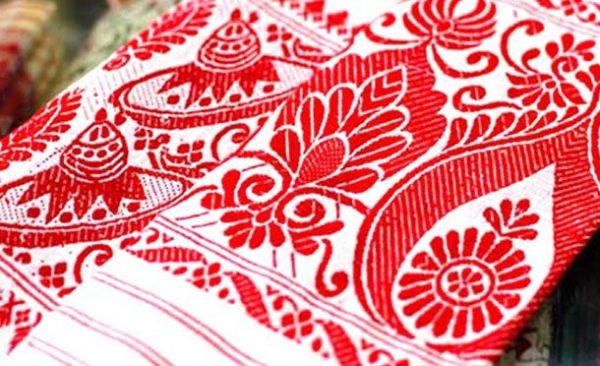
All about Assamese Gamosa: Tradition, Significance, and Types. असमिया गमोसा Handloom and Handicraft Product of Assam. In the vibrant culture of Assam, the Gamosa holds a cherished place as a symbol of tradition and hospitality. Let’s delve into the fascinating world of the Assamese Gamosa—its historical roots, cultural significance, and diverse types. The Story Behind…
All about Assamese Gamosa: Tradition, Significance, and Types. असमिया गमोसा Handloom and Handicraft Product of Assam.
Assamese Gamosa wearing by a Small Kid
In the vibrant culture of Assam, the Gamosa holds a cherished place as a symbol of tradition and hospitality. Let’s delve into the fascinating world of the Assamese Gamosa—its historical roots, cultural significance, and diverse types.
The Story Behind the Gamosa
The Assamese Gamosa’s legacy dates back centuries, with belief attributing its introduction to the rule of the Ahom kings. The name “Gamosa” originates from the Assamese words “ga” (body) and “mosa” (wipe), reflecting its original use as a towel.
Cultural Significance and Tradition
In Assamese society, the Gamosa is more than a piece of cloth; it embodies respect, love, and goodwill. It plays a pivotal role in various social and religious ceremonies, symbolizing purity and hospitality. People often present the Gamosa to guests, use it in weddings, and adorn idols with it during festivals.
Recognized with a GI Tag
The Assamese Gamosa received the Geographical Indication (GI) tag in 2020, highlighting its unique cultural heritage and craftsmanship.
Types of Assamese Gamosa
Plain Gamosa: The most common type, usually white with a red border.
Phulam Gamosa: Features intricate floral or paisley motifs.
Tengapaniya Gamosa: Characterized by black and white stripes symbolizing unity.
Lukai Gamosa: Specifically designed for ceremonial gifting.
Xorai Gamosa: Covers the traditional Assamese offering tray (Xorai).
Mekhela Sador Gamosa: Combines elements of the Gamosa with the traditional attire for women.
Preserving Assamese Heritage
The GI tag not only recognizes the Gamosa’s significance but also ensures its preservation for future generations, safeguarding Assam’s rich cultural heritage.
Embrace the Assamese Gamosa
Embodying tradition and warmth, the Assamese Gamosa is a symbol of pride and identity. Explore its beauty and immerse yourself in the rich tapestry of Assamese culture through this timeless piece of fabric.
What is the Price of an Assamese Gamosa?
he price of an Assamese Gamosa can vary depending on factors like fabric quality, design intricacy, and craftsmanship. Generally, prices range from a few hundred Indian rupees to several thousand rupees or more for finely crafted pieces.
Typical Price Ranges for Assamese Gamosa
Plain Gamosa: Basic cotton Gamosa without intricate designs start from ₹200 to ₹500.
Phulam Gamosa (Decorated): Gamosa with traditional motifs or simple designs range from ₹300 to ₹800.
Gamosa (Black and White Stripes): Priced between ₹400 to ₹1000.
Gamosa (Gift Gamosa): Intended for gifting, prices range from ₹500 to ₹2000 or more.
Mekhela Sador Gamosa (Part of Women’s Attire): Typically priced from ₹800 to ₹3000 based on quality and design.
Xorai Gamosa (Covering Offering Tray): Range from ₹500 to ₹1500 depending on size and embellishments.
Prices may vary based on where you purchase—local markets, online platforms, or specialty stores. Handcrafted and unique Gamosa command higher prices due to their artistic value and cultural significance.
Material Used in Gamosa
Artisans traditionally craft the Assamese Gamosa from locally sourced cotton fabric, valuing its softness, breathability, and moisture-absorbing qualities.
Skilled artisans in Assam spin pure cotton yarn and weave it on handlooms or power looms to create this iconic piece.
Cotton’s versatility makes the Gamosa comfortable for everyday use across diverse climates. It’s a practical choice that aligns with Assam’s cultural heritage, offering both functionality and traditional charm.
While cotton remains the primary material, modern Gamosa variations may feature silk or blended fabrics for decorative purposes. Silk-thread embroidery and embellishments add aesthetic allure, ideal for ceremonial or festive occasions.
Discover the timeless elegance and cultural significance of the Assamese गमोसा, meticulously crafted from premium cotton to adorn homes and mark special moments in Assam’s rich tapestry of traditions.
Uses of Assamese গামোছা Gaamosaa
Discover the versatile uses and cultural significance of the Assamese Gamosa—a cherished symbol in Assam’s heritage:
Symbol of Respect and Hospitality
The Assamese Gamosa is a symbol of respect and hospitality, often presented to guests as a gesture of warmth and goodwill.
Ceremonial and Religious Significance
During traditional ceremonies, people drape the Gamosa around idols and offer it to elders, symbolizing reverence and tradition.
Festivals and Cultural Celebrations
During festivals like Bihu, people wear the Gamosa decoratively, enhancing the festive spirit and cultural ambiance.
Everyday Utility
Beyond ceremonies, people use the Gamosa for practical purposes such as a towel, handkerchief, head covering, or even as a bag for daily needs.
Gift and Souvenir
People exchange Gamosa during weddings and birthdays, symbolizing blessings and best wishes.
Cultural Emblem
Gamosa embodies Assam’s rich heritage, representing unity, tradition, and the enduring spirit of the Assamese people.
Explore the multifaceted uses of the Assamese গামোছা, reflecting centuries-old customs deeply rooted in Assam’s vibrant culture.
Different Spellings of Gamosa in English: Common Variants
The traditional Assamese cloth known as “Gamosa” can be spelled in various ways in English. Explore the common spellings and variants used for “গামোছা”:
Gamosa: The most recognized and widely used spelling for the traditional Assamese cloth.
Gamusa: Another common variant, reflecting regional pronunciation and transliteration.
Gamocha: This spelling is also used in some contexts to match the pronunciation more closely.
Gaamosa: A phonetic spelling emphasizing the pronunciation of the word.
Gamusa: Another transliteration commonly seen in English texts and references.
Gaamusa: An alternate phonetic spelling reflecting pronunciation variations.
Gaamocha: A variation combining pronunciation and transliteration for the traditional cloth.
World of Zubeen Garg Fans. Zubeen Garg’s Fans: How Offline and Online Fan Clubs Across Assam Keep His Legacy Alive. জুবিন অনুৰাগী Few artists inspire devotion as deep as the late Zubeen Garg. The beloved…
Zubeen Garg’s 100+ Songs Across Indian Languages.জুবিন গাৰ্গৰ ১০০ তকৈ বেছি গীত Zubeen Garg, the legendary Assamese singer and composer, recorded over 38,000 songs in more than 40 languages during his career. He captured hearts…
Golden Collection of Zubeen Garg. Bogakoi Bogoli বগা কই বগালী -জুবিন গাৰ্গৰ গীতৰ সোণালী সংকলন Golden Collection of Zubeen Garg Songs 🎶 Celebrate the timeless legacy of one of the most versatile and beloved voices…
Full length Assamese Movie Hiya Diya Niya. Watch HD quality Assamese Cinema Complete Free. হিয়া দিয়া নিয়া Released on 25 February 2000, Hiya Diya Niya marked a turning point in Assamese cinema. Directed by the…
Zubeen Garg Super Hit Hindi Songs Play List, Listen Online Songs on Spotify and YouTube Music. ज़ुबीन गर्ग प्लेलिस्ट Super Hit Hindi Songs by Zubeen Garg Zubeen Garg All Hindi Songs – Playlist Here’s the…
Evergreen Assamese Songs – A Timeless Legacy of Melody and Culture পুৰণি অসমীয়া গীত Introduction Old Assamese songs hold a special place in the hearts of music lovers. These melodies carry timeless charm, cultural richness,…
The Most Popular Assamese Song by Deeplina Deka – Lyrics. Uri Uri Jai – The Assamese Song That Touched Millions of Hearts. অসমীয়া গীত Assamese music seamlessly blends tradition and modernity. Among the many popular…
Anurag Saikia: Award-Winning Composer Bridging Assam and Bollywood. Inspiring Musical Journey, How Anurag Saikia is Revolutionizing Bollywood Music with Assamese Roots. Anurag Saikia has established himself as a leading composer in Bollywood with his soulful…
New Shiva Song “Om Maheshwara”: A Soulful Ode to Shiva That Resonates with Divine Power. Powerful lord Shiva Songs Music transports us to a higher spiritual realm, and Om Maheshwara by Pi Media does exactly…