Management and Project Handling Knowledge
Chapter 2 by Shyamalendra Nath Baruah
Table of Content
- 2.1 Overview of Management.
- 2.2 IT Resource Management.
- 2.3 Job Description & Responsibilities in IT Sector.
- 2.4 Software Development & Project Management.
2.1 Overview of IT Management and Project Handling.
Management in all business and organizational activities is the act of coordinating the efforts of people to accomplish desired goals and objectives using available resources efficiently and effectively. Management comprises planning, organizing, staffing, leading or directing, and controlling an organization (a group of one or more people or entities) or effort for the purpose of accomplishing a goal. Resourcing encompasses the deployment and manipulation of human resources, financial resources, technological resources, and natural resources.
The 4 basic management functions that make up the management process are described in the
following sections
I. PLANNING
ii. ORGANIZING
iii. INFLUENCING
iv. CONTROLLING.
PLANNING
Planning involves choosing tasks that must be performed to attain organizational goals, outlining how the tasks must be performed, and indicating when they should be performed.
ORGANIZING
Organizing can be thought of as assigning the tasks developed in the planning stages, to various individuals or groups within the organization. It is to create a mechanism to put plans into action.
INFLUENCING
Influencing is also referred to as motivating leading or directing.It can be defined as guiding the activities of organization members in the direction that helps the organization move towards the fulfillment of the goals.
CONTROLLING
Controlling is the following roles played by the manager:
Gather information that measures performance.
Compare present performance to pre-established performance norms.
Determine the next action plan and modifications for meeting the desired performance
parameters. Controlling is an ongoing process.
Management and Project Handling Knowledge
2.2 IT Resource Management.
IT Resource Management allows organizations to analyze, monitor and anticipate the utilization and performance of the IT infrastructure by providing an enterprise-wide view of IT services and resources. The solution ensures the delivery of IT services and resources in an efficient, cost-effective manner while demonstrating measurable value to business incentives.
Make faster, better decisions aligning IT and business
IT Resource Management provides fast, self-service access to IT resource performance reports and analysis, as well as the ability to answer questions related to IT resource utilization and future investments. This, in addition to demonstrating how IT is aligned with each business unit, helps ensure that IT is a driving force behind the organization’s success.
Dynamically size your IT infrastructure and reduce risks
IT Resource Management can help you predict when you might exceed resource capacity so you can plan for the additional resources needed to meet changing business requirements. Concise reporting of IT resource performance data helps identify underutilized IT resources that can be repurposed and brings insights to infrastructure consolidation or virtualization projects without negatively affecting
the quality of IT service and business continuity.
Reduce IT costs through better use of resources.
With a fact-based approach to managing your IT infrastructure, IT Resource Management delivers the utilization, availability, and performance information required to know and forecast IT resource needs. These facts enable efficient IT procurement processes, deployment planning, and operational activities that are needed to deliver IT services to the business units.
Management and Project Handling Knowledge
2.3 Job Description & Responsibilities in IT Sector.
Human resource management (HRM, or simply HR) is the management of an organization’s workforce or human resources. It is responsible for the attraction, selection, training, assessment, and rewarding of employees, while also overseeing organizational leadership and culture and ensuring compliance with employment and labor laws. In circumstances where employees desire and are legally authorized to hold a collective bargaining agreement, HR will also serve as the company’s primary liaison with the employees’ representatives (usually a labor union) Information technology (IT) is recognized as a critical infrastructure in many organizations. IT is also emerging as an effective contributor to organizational performance. It is often argued that the success of the IT induction is attributed to strategy, consistent delivery, and systems usability. This finding suggests that human resources (HR) in the organization play a vital role. Information systems (IS) research has recognized the importance of HR in the IT acquisition process.
List of information technology (IT) job titles.
1) Information Technology Director
2) Chief Information Technology Officer
3) Systems Manager
4) System Administrator
5) Programmer
6) Technical Assistant
7) Data Entry Operator
| Sl no | Name of the Post | Required Qualifications +Minimum Experience |
|---|---|---|
| 1 | IT Director | Master of Computer Science/IT + MBA+ (Doctorate Degree Desirable) + 8 Years of Experience in Educational Administration. |
| 2 | Chief IT Officer | Master of Computer Science/IT + MBA (Min 55% of Marks) 10 years of Exp. |
| 3 | System Manager | Bachelor of Science Computer Science /IT (Min 55% of Marks) + Knowledge in PHP, MySQL, CMS, and Web Tech. +Min 2 years of Exp in Open source Software Devt. |
| 4 | System Administrator | Master of Computer Science/IT (Min 55% of Marks)+H/W Networking Certification, or RHCE + Min 2 Years of Sys. Admin Exp |
| 5 | Programmer | Bachelor of Science Computer Science /IT (Min 55% of Marks) + Knowledge in PHP, MySQL, CMS, Web Tech. +Min 2 years of Exp in Open source Software Devt. |
| 6 | Technical Assistant | Science Graduate +PGDCA + Hardware Certification +Min 1 Year Exp. in H/S Maintenance Work |
| 7 | Data Entry Operator | Any Graduate +6 Month Computer Science Application Certificate |
Job Description & Responsibilities of IT Director.
With a directive to solve problems in a multi-server environment, through a variety of software systems and applications, MIS directors have diverse everyday job duties. These professionals analyze technology and industry trends to determine organizational objectives, and then develop strategic plans to meet goals. Depending on the size of the organization, the MIS director may be responsible for ensuring that technological resources work reliably, meet production goals, and will function in the
future. Providing system stability across platforms is another important aspect of the MIS director’s role. In some organizations, these professionals build an IT team, which may involve recruiting, hiring, and mentoring staff.
A management information systems director’s responsibilities might also include supervising security efforts to prevent breaches from hackers and to keep data and confidential information safe. They may also interface with management to report on IT activities and return on investment analysis for systems expenditures. Analyzing, researching, and recommending improvements to current systems and infrastructure are also typical job duties for MIS directors.
Job Description & Responsibilities of System Administrator.
A system administrator, or sysadmin, is a person who is responsible for the upkeep, configuration, and reliable operation of computer systems; especially multi-user computers, such as servers.
The system administrator seeks to ensure that the uptime, performance, resources, and security of the computers he or she manages meet the needs of the users, without exceeding the budget.
To meet these needs, a system administrator may acquire, install, or upgrade computer components and software; automate routine tasks; write computer programs; troubleshoot; train and/or supervise staff; and provide technical support.
A system administrator’s responsibilities might include:
- Analyzing system logs and identifying potential issues with computer systems.
- Introducing and integrating new technologies into existing data center environments.
- Performing routine audits of systems and software.
- Performing backups.
- Applying operating system updates, patches, and configuration changes.
- Installing and configuring new hardware and software.
- Adding, removing, or updating user account information, resetting passwords, etc.
- Answering technical queries and assisting users.
- Responsibility for security.
- Responsible for documenting the configuration of the system.
- Troubleshooting any reported problems.
- System performance tuning.
- Ensuring that the network infrastructure is up and running
Job Description & Responsibilities of Data Entry Operator.
This job is mainly based on the following basics.
This job involves working on a personal computer, and appropriate software to enter data regarding different issues like retrieving data from a computer or to a computer.
- In this job, maintenance of accuracy is very important.
- The data entered should be kept confidential.
- In this job, constant update of the data needs to be done at certain intervals.
- One has to keep on researching and verifying that the data entered is correct.
- Many inter-related duties are also attached to this job.
Duties
The most important duties of the operator are as follows-
Has to verify, update and enter data.
- Has to print and review the data entered so that the records are accurate and complete.
- Has to create as well as maintain formats of data entry and verify all customer inputs.
- Has to ensure that the data are pooled as a batch, that they are accurate and the functions are keyed properly.
- Maintains detailed and accurate records in analytical cases so that accurate data is retrieved.
- Has to type update and revise manuals.
- Has to maintain statistical record log.
- Has to ensure that the jobs are completed successfully even when there are staff shortages, and communicate to the employees and the clients about the changes being made.
Management and Project Handling Knowledge
2.4 Software Development & Project Management.
Various software development approaches, which are used during the software development process, refer to “Software Development Process Models” (e.g., Waterfall model, incremental model, V-model, iterative model, etc.).
Each process model follows a particular life cycle to ensure success in the process of software development.
Software life cycle models describe the phases of the software cycle and the order in which software developers execute those phases.
Each phase produces deliverables required by the next phase in the life cycle. Translate requirements into design.
Code is produced according to the design which is called the development phase.
After coding and development, the testing verifies the deliverable of the implementation phase against requirements.
There are following six phases in every Software development life cycle model:
o Requirement gathering and analysis
o Design
o Implementation or coding
o Testing
o Deployment
o Maintenance
1) Requirement gathering and analysis
Gather business requirements in this phase. This phase is the main focus of the project managers and stakeholders. In order to determine the requirements, hold meetings with managers, stakeholders, and users, addressing questions such as, “Who is going to use the system?”
How will they use the system?
What data needs to be input into the system?
What data should be output by the system?
During the requirements-gathering phase, we answer these general questions.
After gathering requirements, analyze their validity and study the feasibility of incorporating them into the system to be developed.
Finally, we create a Requirement Specification document, which serves as a guideline for the next phase of the model.
2) Design:
In this phase, we prepare the system and software design based on the requirement specifications studied in the first phase.
System Design helps in specifying hardware and system requirements and also helps in defining overall system architecture. The system design specifications serve as input for the next phase of the model.
3) Implementation / Coding:
Upon receiving the system design documents, we divide the work into modules/units and commence the actual coding process.
Since this phase involves code production, it becomes the main focus for the developer. It also happens to be the longest phase of the software development life cycle.
4) Testing:
After developing the code, we test it against the requirements to ensure that the product actually addresses and satisfies the needs gathered during the requirements phase.
During this phase, we conduct unit testing, integration testing, system testing, and acceptance testing.
5) Deployment:
After successful testing, we deliver/deploy the product to the customer for their use.
6) Maintenance:
Once the developed system is in use, customers encounter actual problems that we need to address periodically. Maintenance is the process where we take care of the developed product.
Management and Project Handling Knowledge
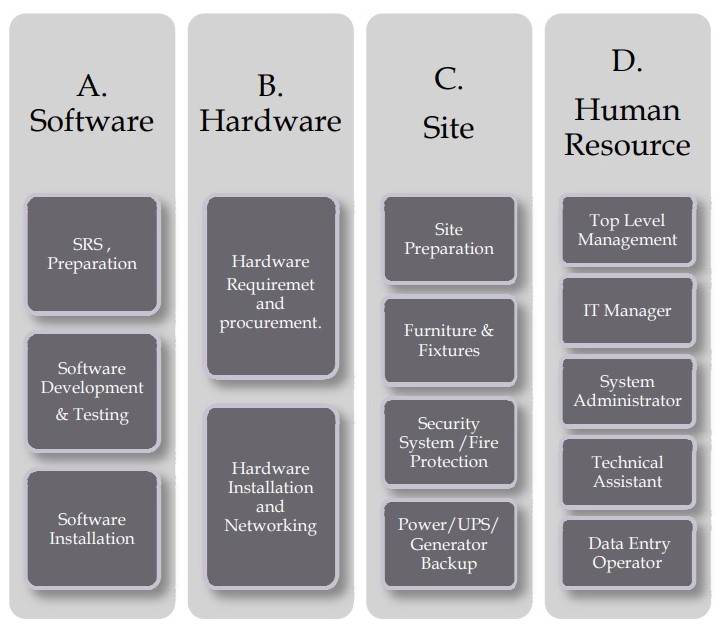
To implement a new IT project, we need to categorize the whole project into four phases. They
are
- Software Development Phase.
- Hardware Procurement Phase.
- Site Preparation Phase
- Recruitment of Human Resources.

Other Chapters of University Examination Management
- Information Technology and its Implementation in University Examination Management
- Integrated University Examination Process
- System Design & Technology for In House Software Development

North Guwahati: Mythology, History, Heritage
North Guwahati Heritage Town of Assam. हेरिटेज टाउन नॉर्थ गुवाहाटी. Ancient History and Mythology of North Guwahati. Mythology and History of North Guwahati Mythological Importance The mythological importance of North Guwahati is linked to the story of the battle between Lord Krishna and King Bana (Banasura) of Sunitpur. It is believed that while travelling to…


Second World War and Assam History for UPSC
Second World War and Assam History for UPSC. Assam’s Crucial Role in World War II and India’s Fight for Independence, দ্বিতীয় বিশ্বযুদ্ধ আৰু ভাৰতৰ স্বাধীনতাৰ যুঁজত অসমৰ গুৰুত্বপূৰ্ণ ভূমিকা.History of Assam. Assam, a key region in northeastern India, played a vital role during World War II. Its strategic location made it central to both the…

Biography of Uday Nath Baruah of North Guwahati Assam
Biography of Uday Nath Baruah. North Guwahati Silsakoo.কর্মযোগী উদয় নাথ বৰুৱাৰ জীৱনী লিখক : শ্যামলেন্দ্ৰ নাথ বৰুৱা জন্ম আৰু পৰিয়াল Birth and Family উদয় নাথ বৰুৱাৰ জন্ম হৈছিল ১৮৯৯ চনৰ ২৪ ছেপ্টেম্বৰ তাৰিখে সেই সময়ৰ খাগৰিজান জিলা আৰু বৰ্তমান নগাওঁ জিলাৰ চলচলিৰ বৰহমপুৰ গাঁৱত। তেওঁৰ পিতৃৰ নাম আছিল দেবনাথ বৰুৱা আৰু মাতৃৰ নাম আছিল যোগবালা…

পৰিবলৈ নিদিওঁ শাত এই গাভৰু দেহাক Romantic Assamese Poem
পৰিবলৈ নিদিওঁ শাত এই গাভৰু দেহাক Romantic Assamese Poem

Assamese Romantic Poem: Love & Desire
Assamese Romantic Poem: Love & Desire. A Modern Assamese Poem. নিসিদ্ধ গংগাত ডুব যোৱাৰ ভয়ত Love, Desire and Relationships অসমীয়া ৰোমান্টিক কবিতা: প্ৰেম আৰু কামনা নিসিদ্ধ গংগাত ডুব যোৱাৰ ভয়ত তপ্ত পৰশৰ মাদকতাৰ পৰা পলায়ন কৰি নিজকে কিমান দিবা যাতনা ? সঘন উশাহৰ উশৃংখলতাই যৌৱনৰ উঠন বুকৰ ভাজে ভাজে নামাই দিয়াআকাশি গংগাৰ মৃদু লুণীয়া গোন্ধটোবাৰু কেনেকৈ লুকুৱাবা নিজৰ পৰা…

Auniati Kamal Dev HS School North Guwahati Silsakoo
Auniati Kamal Dev HS School North Guwahati Silsakoo. আউনীআটী কমল দেৱ এইচ এছ স্কুল উত্তৰ গুৱাহাটী The Auniati Kamal Dev High School was established in 1867 in memory of Sri Sri Kamaldev Dev Goswami of the Auniati Satra. It holds a special place in the educational landscape of the north bank of the river Brahmaputra.…

A Brief History of Baruah Dynasty of Assam. বৰুৱা বংশ
A Brief History of Baruah Dynasty. Download the complete Book on Baruah’s Family History in PDF. Kayastha Cast of Assam. Complete Family Tree and Genealogy of great families of Assam. কাণ্ডাৰ বা কঢ়াল বৰুৱা বংশৰ সংক্ষিপ্ত বিৱৰণি । প্রথম পৰিচ্ছেদ । ভাৰতবৰ্ষৰ উত্তৰপূৱ কোণত অৱস্থিত আমাৰ এই অসম প্রদেশখন মহাকাব্য যুগৰো আগৰেপৰা বীৰ-প্ৰসৱিনী স্বৰূপে জনাজাত…

Dirgheswari Temple North Guwahati
Dirgheswari Temple North Guwahati , দীৰ্ঘেশ্বৰী শক্তি পীঠ – মা দুৰ্গা মন্দিৰ, উত্তৰ গুৱাহাটী The Dirgheswari Temple, also known as Dirgeshwari Devalaya, is a prominent Hindu Shakti temple in North Guwahati, Assam, Bharat. It is dedicated to Goddess Durga, who is worshipped in her divine form. Many devotees and tourists visit the temple throughout the…

Lachit Maidam Jorhat Assam
Lachit Maidam Jorhat Assam. Holongapara, Lahdoigargh Lachit Maidam Jorhat Assam Lachit Maidam, situated in Hoolungapara, Jorhat, serves as a significant burial ground for Ahom royals and nobles. It serves as a memorial to honor the brave warrior Lachit Borphukan. Who played a crucial role in the history of Assam. Lachit Borphukan’s most notable achievement was…