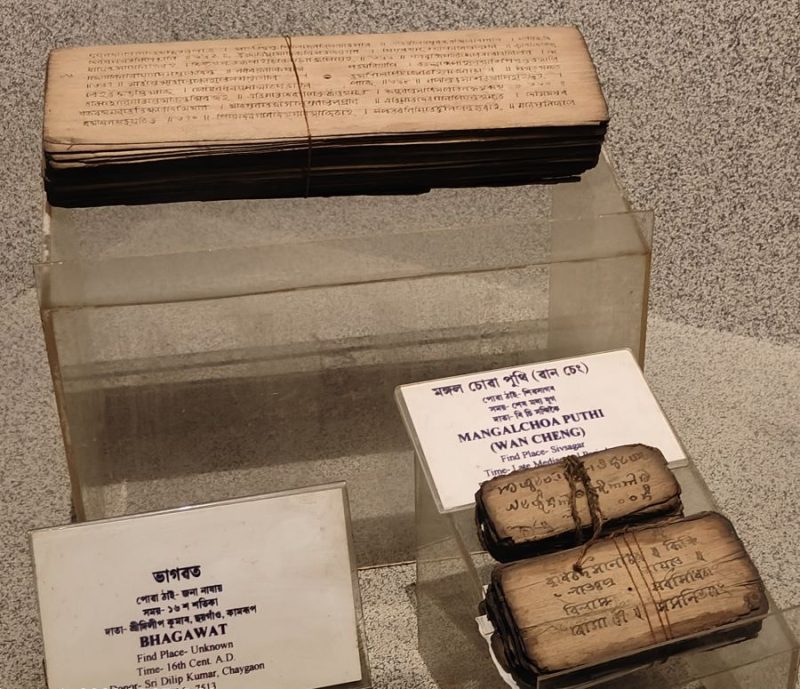
Discovering the Ancient Art of Sanchipat Books: সাঁচিপাতৰ পুথি A Cultural Treasure of Assam

Introduction
In the heart of Assam, nestled along the southern bank of the Brahmaputra River, lies a rich tradition of crafting books that predates modern printing methods. These ancient manuscripts, known as Sanchipat books, are a testament to the ingenuity and artistic prowess of the Assamese people. Made from the bark of the Sanchi or Agarwood tree, Sanchipat books hold a special place in the cultural and literary history of Assam.
The Unique Craftsmanship Behind Sanchipat Books
The process of creating Sanchipat books is an intricate and labor-intensive art, passed down through generations. Carefully harvesting the bark of old or mature Sanchi trees transforms it into durable leaves suitable for writing. Here’s a step-by-step look at this fascinating process.
- Bark Harvesting and Drying: First, they carefully remove the bark from the tree and leave it to dry until it becomes crisp. This initial drying is crucial for preparing the bark for further processing.
- Cleaning and Sieving: They clean the dried bark husks with rice straw salt and dry them in the sun. They then cut the bark to size and sieve it using bamboo mats to remove any accumulated dirt.
- Grinding and Pressing: They slide stones over the leaves to finely grind and smooth them. After another round of drying, they press the leaves with heavy objects, like iron, to straighten them.
- Final Preparations: They rub the leaves with mud, level them, and paint them with peanut oil to prepare the surface for writing. Sometimes, they apply hengul-haital to brighten the ink.
- Drawing Lines and Preparing for Writing: They draw lines at equal distances with a fine pen, known as Krit Diya, to guide the scribe. A hole, called the navel of the book, is made in the center following traditional instructions from the Yogini Tantra.
The Scribes: Artists and Custodians of Knowledge
Scribes, or writers, who created Sanchipat books were revered for their skill and dedication. They meticulously wrote in beautiful, well-organized scripts, paying great attention to detail and ensuring minimal spelling errors. These writers considered their craft sacred, blending artistry with a deep respect for knowledge.
Illustrations and Notable Works
Sanchipat books are not just textual records but often feature exquisite illustrations. Some renowned illustrated manuscripts include the Hasti-Vidyarnava, the Shankhachur Badha, and the Geet-Govinda. These works showcase the rich artistic heritage of Assam and provide a visual complement to the written word.
Historical Significance
The tradition of writing on Sanchipat dates back to before the seventh century. Historical texts, such as Banbhatta’s Harshacharita, mention gifts sent by Bhaskar Varman to Harshavardhana, including a book of proverbs written on Sanchipat. This highlights the cultural and scholarly exchanges facilitated by these manuscripts.
Conclusion
The art of making Sanchipat books is a unique cultural heritage of Assam, distinguished by its meticulous craftsmanship and historical significance. These ancient manuscripts serve as a bridge to the past, offering insights into the literary and artistic traditions of the region. As we celebrate this rich legacy, it is crucial to preserve and promote this rare art form for future generations.
By exploring and appreciating the intricate process behind Sanchipat books, we gain a deeper understanding of Assam’s cultural heritage and the timeless dedication of its scribes and artisans.

Bagurumba Dwhou 2026 at Sarusajai Stadium, Guwahati: Assam
Bagurumba Dwhou 2026 at Sarusajai Stadium, Guwahati: Assam Showcases Bodo Culture Before the Nation.বড়ো জনগোষ্ঠীৰ নৃত্য. Introduction Assam prepares to witness a historic cultural milestone with Bagurumba Dwhou 2026, a grand celebration of Bodo heritage…


Kalita Community of Assam: History, Culture, and Social Identity
Kalita Community of Assam: History, Culture, and Social Identity. অসমৰ কলিতা সম্প্ৰদায় The Kalita community of Assam forms an integral part of the state’s indigenous social fabric. The Kalitas are known for their deep historical…

Swahid Smarak Kshetra , Guwahati: Top Tourist Destination
Swahid Smarak Kshetra , Guwahati: A Historic Tourist Landmark of Assam. असम पर्यटन Swahid Smarak Kshetra( স্বহিদ স্মাৰক ক্ষেত্ৰত )in Guwahati stands as one of the most meaningful tourist places in Assam. This historic memorial…

Assam Book Fair Guwahati 2026 Begins at Khanapara: Dates, Timing & Highlights
Assam Book Fair Guwahati 2026 Begins at Khanapara: A Winter Paradise for Book Lovers অসম গ্ৰন্থমেলা গুৱাহাটী The Assam Book Fair Guwahati 2026 has officially begun. It brings books, culture, and creativity together in the…

Christmas in North East India: Experience a Magical Winter Tourism Destination
Christmas in North East India. उत्तर पूर्व भारत में क्रिसमस North East India offers one of the most authentic and heart-warming Christmas travel experiences in India. During December, the region transforms into a land of…

Ali Aye Ligang Festival of Assam: A Vibrant Celebration of the Mising Community
Ali Aye Ligang Festival of Assam. আলি অয়ে লিগাং উৎসৱ, অসম This is one of the most vibrant festivals of Assam. It is culturally rich and celebrated primarily by the Mising (Mishing) tribal community. The…
Something went wrong. Please refresh the page and/or try again.