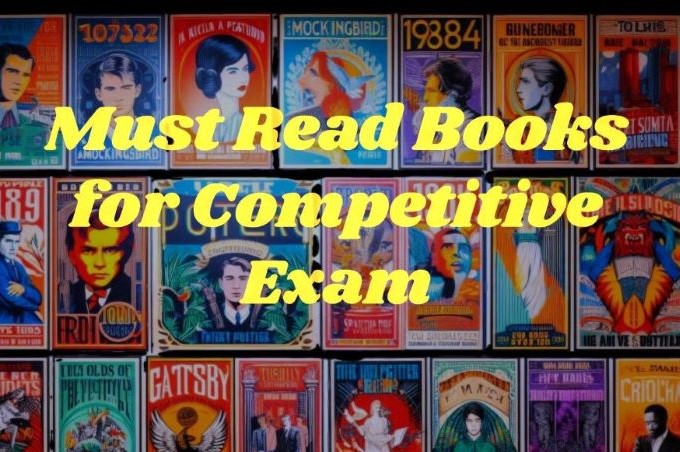
Must Read Books for Competitive Exam GK Aspirants: An Essential Guide. Enhance your competitive exam preparation with this essential guide on famous books and their authors. Perfect for UPSC, SSC, and other state exams in India. Famous Books and Authors. Recommended Books for UPSC, SSC. State Civil Service Exams. Government Job General Knowledge Study. Assam…
Must Read Books for Competitive Exam GK Aspirants: An Essential Guide. Enhance your competitive exam preparation with this essential guide on famous books and their authors. Perfect for UPSC, SSC, and other state exams in India. Famous Books and Authors. Recommended Books for UPSC, SSC. State Civil Service Exams. Government Job General Knowledge Study. Assam Government Interview Essential Guide. Assam Public Service Examination Guide.
Preparing for competitive exams in India requires a well-rounded approach, where having a solid grasp of general knowledge is crucial. Among the many topics, familiarity with famous books and their authors stands out as a key area, often featured in various exams like UPSC, SSC, and state civil services. To help you navigate this, we’ve compiled a list of must-read books and their authors, which are frequently asked in these exams.
1. Historical and Political Insights
The Oxford History of India by Vincent Smith. A comprehensive account of India’s history from ancient times to the British era, this book is a staple for history buffs.
Pakistan: The Formative Phase 1857-1948 by Khalid B. Sayeed. This book delves into the political evolution of Pakistan, a crucial area of study for understanding South Asian geopolitics.
The History of the Decline and Fall of the Roman Empire by Edward Gibbon. A classic in world history, it covers the fall of the Roman Empire, an essential read for understanding historical patterns and their impacts.
Freedom at Midnight by Larry Collins and Dominique Lapierre. An engaging narrative on India’s independence and partition, it’s a go-to book for understanding the complexities of India’s freedom struggle.
2. Literary Classics
Pride and Prejudice by Jane Austen. This novel not only enhances your English literature knowledge but also sharpens comprehension skills, which are vital for any competitive exam.
Paradise Lost by John Milton. A profound epic poem that delves into biblical themes, it’s often referred to in literature and history exams.
Romeo and Juliet by William Shakespeare. Knowing the works of Shakespeare is almost mandatory for any English literature section, and this play is among his most iconic.
The Divine Comedy by Dante Alighieri. A significant work in world literature, this epic poem offers insights into medieval worldviews.
3. Philosophical and Ideological Works
Republic by Plato. A foundational text in Western philosophy, understanding its ideas can greatly benefit those tackling ethics and philosophy questions.
The Social Contract by Jean-Jacques Rousseau. This work is central to political philosophy, making it essential for anyone studying the foundations of modern governance.
The Reconstruction of Religious Thought in Islam by Muhammad Iqbal. This book is important for understanding modern Islamic philosophy and is often referenced in religious and philosophical discussions.
The Life Divine by Sri Aurobindo. A philosophical work that blends spirituality with intellectual discourse, it’s valuable for those interested in Indian philosophy.
4. Biographical Works
Jinnah of Pakistan by Stanley Wolpert. A detailed biography of the founder of Pakistan, this book is crucial for understanding the subcontinent’s history.
Profiles in Courage by John F. Kennedy: A collection of inspiring stories about acts of bravery by U.S. Senators, useful for both motivational reading and understanding American history.
My Leader by Ziauddin Ahmed Suleri. This book provides insights into the life of Quaid-e-Azam Muhammad Ali Jinnah, a pivotal figure in South Asian history.
5. Miscellaneous but Significant
Five Thousand Years of Pakistan by M. Wheeler: Offers a deep dive into the archaeological history of the region, essential for history enthusiasts.
Faust by Johann Wolfgang von Goethe: A significant work in Western literature, often referenced in philosophical and literary discussions.
Gitanjali by Rabindranath Tagore: A Nobel Prize-winning collection of poems, it’s an important part of modern Indian literature.
Mein Kampf by Adolf Hitler. While controversial, it’s crucial for understanding the ideological foundations of World War II and modern European history.
How to Use this Must Read Books for Competitive Exam GK.
For competitive exams, it’s not enough to just memorize the names of books and authors. You should:
Understand the Context: Know the significance of each book in its historical or literary context.
Connect Themes: Relate the themes of these works to broader topics covered in your exams.
Practice Questions: Use this list to practice multiple-choice questions, matching exercises, and short-answer questions.
Final Tips for Competitive Exam GK
Remember, the key to acing the general knowledge section of any competitive exam lies in consistent reading and making connections between different areas of knowledge. Use this list as a starting point and expand your reading to include summaries and critical analyses of these works.
These are crucial for understanding historical, political, literary, and philosophical themes. These works are not only valuable for competitive exams but also for gaining a deeper understanding of the world.
Common Insects of Assam and North East India: Assamese Names, Pronunciations, and Local Insights. পোক পতংগ Assam and the North East of India host a wide range of insects. These creatures not only play a…
Petrol Types in India: Ethanol Blends, Grades, and Prices in 2025. Ethanol-blended petrol E20 India. Petrol prices in India 2025 India’s petrol landscape is changing rapidly, with a strong push toward ethanol-blended fuels, multiple petrol…
Shoe Size Guide for Indian Shoppers – UK vs US Sizes Explained. Comparison chart of footwear in British Units and American Standard in the Indian Context. When you shop for shoes at a mall, you…
Illegal Immigration in Assam: Understanding the Real Problems of Assam. Who Are the Illegal Immigrants in Assam? Key Problems Caused by Illegal Immigration in Assam. Illegal immigration in Assam has remained one of the most…
Color combination chart for formal shirt and pant pairings. Government and Corporate office formal, dress colour combination Here are timeless and stylish formal shirt and pant color combinations for various occasions — from office meetings…
Assam is a paradise for birdwatchers, boasting extensive biodiversity and protected species like the Hargila. Community initiatives, led by women known as the “Hargila Army,” have revived efforts to conserve this rare stork. With various…
First Day of Spring 2025: Traditions, Facts, and Fun Ideas for Americans. First day of Spring 2025 Calander. 20th March 2025. The first day of spring, also known as the spring equinox, is a time of renewal,…
Assamese Dog Breeds: A Complete Guide to Care, Food, and Maintenance Assam, a land of rich biodiversity, is home to unique indigenous dog breeds. The Assamese Hound, also known as the Naga Hound or Tangkhul…
Second World War and Assam History for UPSC. Assam’s Crucial Role in World War II and India’s Fight for Independence, দ্বিতীয় বিশ্বযুদ্ধ আৰু ভাৰতৰ স্বাধীনতাৰ যুঁজত অসমৰ গুৰুত্বপূৰ্ণ ভূমিকা.History of Assam. Assam, a key region…
Airports of Assam. List of all major Airports of Assam. Assam Travel and Tourism Guide. International Airports in Assam. Flights to Assam.असम के हवाई अड्डे. Connecting the Northeast to the World. বিশ্বলৈ উৰণ. Assam is…
The New Saraighat Bridge. Strengthening Connectivity Between Guwahati and North Guwahati. Kamrup District Assam, India. This bridge is, also known as the 2nd Saraighat Bridge, is a crucial infrastructure project that enhances connectivity between Guwahati…
Recommended Book List for deeper understanding of the world. World Famous Book List and Authors. Famous Book Context and Theme. Download famous books in PDF format. Online Must-Read Book List. 1. Historical and Political Studies…