MBA Examinations Rules Regulations Summar Project, maximum number of Chances, CGPA calculations, Arrear Subjects, Internal Marks,

Examinations Rules and Regulations for MBA course in India
Examinations Rules and Regulations for MBA course:
a. There will be 4 (four) examinations, one at the end of each semester. Duration of the Semester Period will be as follows:
First and Third semester: June to December,
Second and Fourth Semester: January to May
b. The examination board shall examine a candidate based on the syllabi, with each written full paper having a duration of 3 (three) hours.
c. The university shall not send up a candidate for a semester examination if he/she has not attended at least 75% of the classes held for each subject, including lectures, seminars, tutorials, and case analysis.
d. Each paper shall allocate 100 marks, with 30 marks allocated to internal evaluation. The minimum marks required for passing the examination shall be 40 percent both in the internal evaluation and written examinations, in each paper separately.
Internal evaluation will determine the grades for non-credit papers instead of marks. Nevertheless, they will not count grades of non-credit papers for the declaration of results.
e. If a candidate fails to secure pass marks in a subject paper during internal evaluation, the university will debar them from appearing in the Term End Semester examination. They will need to seek re-admission into that semester when it is offered.
Summer Project
f. A candidate shall submit a Summer Project Study Report hereinafter referred to as the Report, in duplicate to the Head of the Dept. within 3 weeks of completion of the projects; generally, by 20th August in the Third Semester period.
The Report shall allocate a total of 100 marks, with 30 marks designated for internal evaluation. The remaining 70 marks shall divide into 50 marks for evaluating the text of the report and 20 marks for Viva-Voce.
A teacher from the department, referred to as the Guide for this purpose, will supervise the preparation of the Report.
The Departmental Advisory Committee shall select the Guide. The Guide, in consultation with the concerned candidate, shall determine the topic and the exact title of the report.
Two examiners, including the Guide, shall evaluate each Report.
The candidate’s mark on the text part of the Report shall be the average of the marks awarded by the two examiners. The Guide and the external examiner shall jointly conduct the Viva-Voce examination.
If the external examiner is not available, the Head of the Dept. may appoint person to conduct the Viva-Voce examination. The Viva-Voce marks obtained by the candidate together with the average in the text shall be the final marks a warded I candidate on the Report.
g. A student who could not appear or failed in any semester (i.e. securing F grade), will be allotted to clear the same as follows:
a. First semester with the regular Third semester
b. Second semester with the regular Fourth semester
h. If a candidate secures passing marks in the internal evaluation but fails to clear any of the semester examinations, the university will permit them to appear in the next semester’s examination. Nevertheless, the university will withhold their final results after the Fourth semester until they successfully clear all the backlog, which includes obtaining an F grade and achieving a minimum aggregate CGPA of 5.
Maximum Chances
i. A student can clear four semesters within a maximum of four years. He/she will be restricted from taking more than three chances in any semester.
j. If a candidate fails in a semester examination, they shall carry over the marks secured in internal evaluation for each subject to the next semester examination.However, it is essential for them to obtain the minimum pass mark, and this validity shall last for only two years.
Result
Passing all four-semester examinations will result in the award of an MBA Degree to the candidate.
Tags relate to MBA Course
Read Next
You may also have an interest in.
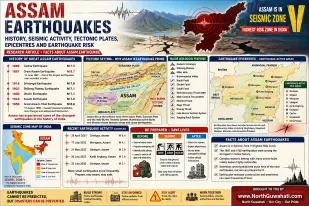
Assam Earthquakes: History, Seismic Activity, Tectonic Plates, Epicentres and Earthquake Risk
Assam Earthquakes. Assam Seismic Activity. List of Great Assam Earthquakes.Seismic Zone for Assam. Geographical References of the Tectonic Plates in Assam. Epicenter of Earthquakes in Assam. India Earthquake Report. Disaster Management Assam. Assam Earthquakes Assam ranks among the most earthquake-prone…
10 Most Important Hindu Symbols and Their Powerful Meanings
10 Most Important Hindu Symbols and Their Powerful Meanings. ॐ • स्वस्तिक • त्रिशूल • कमल • दीप • शंख • कलश • तिलक • चक्र • नन्दी Hindu symbols and their meanings in English. Hinduism has a rich tradition…
Greek Alphabet and Scientific Symbols: Names, Meanings
Greek Alphabet and Scientific Symbols: English Names, Pronunciation and Uses The Greek alphabet is one of the most important writing systems used in science and mathematics. You may already know some Greek letters such as Alpha (α), Beta (β), Pi…
Greek Numerical Prefixes Used in Science -Easy Examples for Students
Greek numerical prefixes are widely used in science (especially in chemistry, biology, and physics) to indicate numbers or quantities. Scientists commonly use Greek numerical prefixes to show numbers and quantities in scientific terms. Students often encounter these prefixes in chemistry,…