Assamese Script – Assamese Language Alphabets. Modern Indian Language. History of Origin of Assamese Scripts, Alphabets and Numbers. Assamese Unicode Fonts for Computer Download. Old Assamese Stone Inscriptions. The Assamese script, known as the Assamese or Oxomiya script (অসমীয়া লিপি), writes the language spoken primarily in Assam. This script derives from the ancient Brahmi script.…
Assamese Script – Assamese Language Alphabets. Modern Indian Language. History of Origin of Assamese Scripts, Alphabets and Numbers. Assamese Unicode Fonts for Computer Download. Old Assamese Stone Inscriptions.
The Assamese script, known as the Assamese or Oxomiya script (অসমীয়া লিপি), writes the language spoken primarily in Assam. This script derives from the ancient Brahmi script.
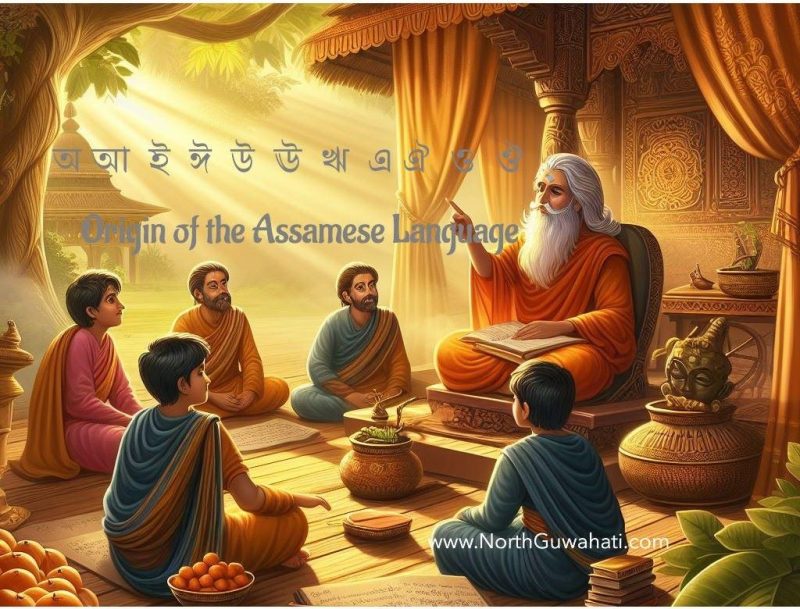
Origin of the Assamese Language
The Assamese language’s rich history stems from its evolution from ancient Indo-Aryan dialects and influences from neighboring cultures.
Scholars propose that Assamese originated from the Kamarupi dialect of Eastern Magadhi Prakrit, prevalent in historic Kamarupa (present-day Assam).
Scholars discuss the direct connection between Assamese and Magadhi Prakrit. Assamese language was evolved from ancient Indo-Aryan roots and that it was influenced by Tibeto-Burman languages.
The historical context of Assamese closely links it to the ancient kingdom of Kamarupa, which thrived from the 4th to the 12th centuries.
Assamese evolved into a distinct language, assimilating linguistic elements from Tibeto-Burman languages and local influences.
The earliest literary evidence of Assamese traces back to the 9th-century Buddhist verses known as Charyapada.
These verses show linguistic affinities with Assamese, Bengali, Maithili, and Odia, highlighting the transition of Prakrit into regional languages.
Before the seventh century CE, Assamese and kindred Eastern Indo-Aryan languages underwent significant linguistic development. It is emerging as a distinct language with its own script and literary tradition.
The language’s evolution reflects dynamic cultural and historical interactions, shaping Assamese into its vibrant present form.
Structure of the Assamese Language
The Assamese script classifies as an abugida, where it writes consonant-vowel sequences together as a unit. Diacritical markings in this script modify or conceal the inherent vowel sound of consonant letters.
The distinct structure of the Assamese script enables effective representation of phonetic features and facilitates coherent and compact syllable writing.
Direction of Assamese Script
In Assamese script, vowels are typically connected to the preceding consonant, and the script is written from left to right.
অ (a) আ (aa) ই (i) ঈ (ii) উ (u) ঊ (uu) ঋ (ri) এ (e) ঐ (oi) ও (o) ঔ (ou)
Consonants (Byonjon-bornomala)
ক (ko) খ (kho) গ (go) ঘ (gho) ঙ (ngo)
চ (cho) ছ (chho) জ (jo) ঝ (jho) ঞ (njo)
ট (ṭo) ঠ (ṭho) ড (ḍo) ঢ (ḍho) ণ (ṇo)
ত (to) থ (tho) দ (do) ধ (dho) ন (no)
প (po) ফ (pho) ব (bo) ভ (bho) ম (mo)
য (zô) ৰ (rô) ল (lô) ৱ (wô)
শ (xô) ষ (xô) স (sô) হ (hô)
য় (yô) ৎ (t) ং (n) ঃ (h) ঁ (ã)
Assamese Unicode Fonts
The Assamese script plays a vital role in preserving and promoting the Assamese language and its unique identity. It is also adapted for use in digital media, with Unicode support enabling its use on computers and smartphones.
Assamese Unicode fonts are essential for accurately typing and displaying Assamese text on computers and mobile devices.
You can visit official websites like RUSA, Assam, or explore other options like ASOT-GISTBidisha and Banikanta Unicode Font.
Installing these fonts allows users to easily enter and render Assamese characters in word processors and software.
Unicode fonts ensure accurate representation and compatibility across platforms for working effectively with Assamese language content.
Assamese Numbers
১ – এক (ek)- 1 ২ – দুই (dui)-2 ৩ – তিনি (tini)-3 ৪ – চাৰি (sari)-4 ৫ – পাঁচ (pas)-5 ৬ – ছয় (soy)-6 ৭ – সাত (xat)-7 ৮ – আঠ (ath)-8 ৯ – ন (no)-9 ১০ – দহ (doh)-10
Assamese stone inscriptions
The oldest Assamese stone inscriptions, dating to the 5th century CE, provide historical insights into modern-day Assam’s Kamarupa. The Umachal Rock Inscription, dating back to the 5th century CE, is associated with Surendravarman. Archaeologists found it in the Nilachal Hills, Guwahati, and it is written in a script resembling the eastern Gupta script. Archaeologists discovered the Nagajari-Khanikargaon Rock Inscription in Khanikargaon, Golaghat, dating from the 5th century CE.
Another famous stone inscription was Kanai Borosi Bowa Sila Lipi at North Guwahati Rajaduwar. These inscriptions depict the evolving language and script of the region during that period. Over centuries, the script changed, resulting in the proto-Assamese script and later Medieval and modern Assamese scripts.
ABC of Semiconductor. A Book written by Dr. Kandarpa Kumar Sarma of Gauhati University.”ছেমিকণ্ডাক্টৰ বা অৰ্ধপৰিবাহীৰ অ আ ক খ” The technology landscape in Northeast India has taken a giant leap forward with the establishment…
Special Trains for Maha Kumbh Mela 2025. Northeast Frontier Railway. To cater to the immense rush of pilgrims for the Maha Kumbh Mela 2025, Northeast Frontier Railway (NFR) has announced the operation of special trains…
Assam Book Fair 2024: A Grand Literary Celebration in Guwahati.অসম গ্ৰন্থমেলা ২০২৪ The Assam Book Fair 2024 is back in Guwahati, promising an enriching experience for book lovers, writers, and literary enthusiasts. Organized by the…
Assam Sahitya Sabha 2025 Session Pathsala.অসম সাহিত্য সভা ২০২৫ পাঠশালা অধিবেশন. চিৰ চেনেহী মোৰ ভাষা জননী The Assam Sahitya Sabha is the premier literary organization of Assam, dedicated to promoting and preserving Assamese literature, language,…
Recommended Book List for deeper understanding of the world. World Famous Book List and Authors. Famous Book Context and Theme. Download famous books in PDF format. Online Must-Read Book List. 1. Historical and Political Studies…
Must Read Books for Competitive Exam GK Aspirants: An Essential Guide. Enhance your competitive exam preparation with this essential guide on famous books and their authors. Perfect for UPSC, SSC, and other state exams in…
Discovering the Ancient Art of Sanchipat Books: সাঁচিপাতৰ পুথি A Cultural Treasure of Assam Introduction In the heart of Assam, nestled along the southern bank of the Brahmaputra River, lies a rich tradition of crafting…
Saraswati Puja in Assam: 14 February Special Celebration among the youth of Assam. Festival of Knowledge, Wisdom and Art.সৰস্বতী পূজা People across India observe Saraswati Puja, also recognized as Basant Panchami, with great enthusiasm, marking…
The Art of Influence. What is Power Dynamics? How do you use it in your professional Life? Understanding of Power accumulation for your success. Elements of Power Dynamics. Power Relationship. Strategies and Tactics. Individuals, groups,…
Saraighat War Memorial Park at Agyathuri, Recreational Park at North Guwahati, Tourist Destination, Children’s Park at Amingaon, Hajo Guwahati Road. The Saraighat War Memorial Park at Agyathuri is a remarkable tribute to the historical Battle…
Something went wrong. Please refresh the page and/or try again.